Coding in Reception: Building Thinkers, Not Just Programmers
If you’d told me a few years ago that our Reception children would be programming robots, building moving machines, and debugging their own creations, I’m not sure I would have believed it either. But walk into our classroom on any given day, and that’s exactly what you’ll find. And the joy on their faces? Absolutely infectious.
When parents hear the word “coding”, many picture children hunched over screens typing lines of computer code. In reality, what we do is so much more colourful, creative, and hands-on than that.
It starts with play, and that’s the point
In Reception, coding is really about something called computational thinking: learning to problem-solve, predict, sequence, and think logically. These are life skills, not just tech skills. In fact, pioneering education researcher Professor Marina Bers of Tufts University has spent decades studying how young children learn through coding, and her research shows that when children code, they aren’t just learning a technical skill, they are learning a new way of thinking and organising thought. She describes coding as a new kind of literacy for the 21st century.
We couldn’t agree more.
Bee-Bots, butterflies, and brilliant minds
We start with programmable toys called Bee-Bots and Code-a-Pillars. The children design maps linked to our topics and programme the little robots to follow routes across them. During our recent learning about butterfly migration, we laid out pathways using masking tape and sent our “butterflies” travelling across continents. The concentration, the teamwork, the squeals of delight when it works = it’s one of those moments that reminds you why Early Years is such a magical place to teach.
And when it doesn’t work? That’s where the real magic happens. The children learn to “debug”. to go back, find the mistake, and try again. Without realising it, they are building resilience, patience, and a growth mindset, one tiny robot at a time.
Little engineers in the making
Coding in Reception also means making things. The children design and build their own simple moving robots using lolly sticks and small motors. They discover that a sequence of actions produces movement, and that they are the ones in control of it. Watching a child’s face when their creation whirs to life for the first time is one of the great privileges of this job.
Digital creativity and staying safe online
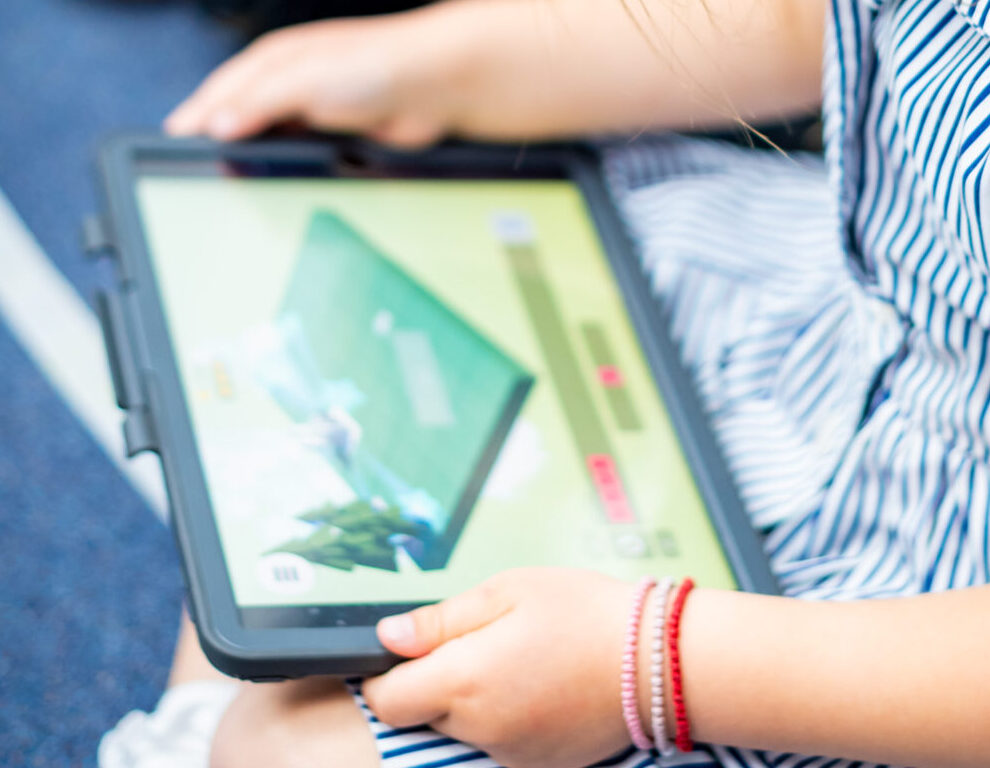
On our iPads, we explore simple coding apps that practise sequencing and logical thinking. We also use technology as a creative tool, for observational drawings, making their own mini books, and documenting their learning journeys. Alongside all of this, we have age-appropriate conversations about internet safety and being responsible, thoughtful digital citizens. It’s never too early to start.
Why it matters so much
Research shows that quality early childhood education positively affects children’s learning later in life, Frontiers and computational thinking is increasingly recognised as one of the most valuable skills we can nurture from the very beginning. We aren’t trying to fast-track anyone academically, we are planting seeds of curiosity, confidence, and creativity that will grow for years to come.
Most of all, it is joyful. Our classroom is full of laughter, discussion, experimentation, and the kind of pride that comes from making something work after three attempts and a lot of giggling.
These children are already becoming brilliant, confident thinkers. It is an honour to be part of that!